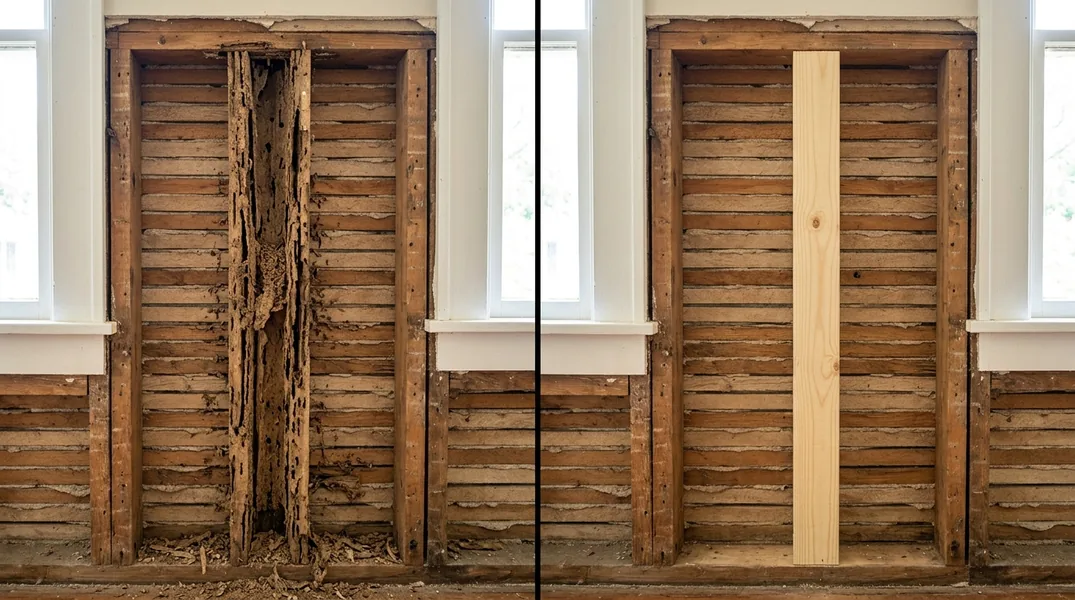
Dry Rot vs. Termite Damage: Why the Difference Matters
If you own a bungalow or older home in Charlotte, you've probably heard warnings about wood rot and termites. Both can cause serious structural damage, but they require very different repair approaches. Misidentifying the problem could mean wasting money on the wrong treatment or, worse, letting the damage spread unchecked.
The stakes are high because both dry rot and termite damage compromise the integrity of your home's wooden framework. However, the root causes are entirely different. Dry rot is a fungal decay process triggered by moisture and poor ventilation, while termites are living insects that actively consume wood as food. Understanding which threat you're facing is the first step toward protecting your investment and keeping your family safe in a structurally sound home.
What Does Wood Rot Look Like? Identifying Dry Rot Damage
Dry rot typically appears as wood that has darkened, become brittle, and cracked in a cube-like pattern. The affected wood often feels spongy or soft when you press on it, and it may crumble easily in your hands. One of the most telling signs is a musty, earthy odor coming from affected areas, particularly in basements, crawl spaces, or around windows and doors where moisture tends to accumulate.
The fungus responsible for dry rot spreads through fungal threads called mycelium, which can travel across mortar, concrete, and even through non-wooden materials. This means dry rot can spread rapidly if left untreated, potentially affecting multiple structural members in your home. You might also notice fine, powdery spores on the wood surface or a white or gray fungal growth that looks like cotton or cobwebs. If you spot these signs in your Charlotte home, it's time to call in a professional for Wood Rot & Dry Rot Repair before the damage becomes catastrophic.
Signs of Termite Damage in Wood: What to Look For
Termite damage looks quite different from dry rot. Termites leave behind hollow galleries or tunnels inside the wood as they eat their way through it. From the outside, the wood might appear intact or have only small entry holes, but inside it's been hollowed out like Swiss cheese. This is why termite damage can be deceptive: the surface may look fine while the structural integrity is severely compromised.
Other visible signs of termite damage include mud tubes (pencil-thin tunnels made of soil and saliva) running up foundation walls, discarded wings near windowsills or light fixtures, and small piles of wood-colored droppings called frass. Unlike dry rot, which produces a musty smell, termite-infested wood may have a faint, sweet odor. If you tap on termite-damaged wood, it often sounds hollow. Subterranean termites, which are common in the Charlotte area, need moisture to survive, so they often establish colonies in damp soil near your foundation and build mud tubes to reach wood above ground. If you suspect termite activity, Termite Damage Repair should be addressed immediately to prevent further structural compromise.
Key Differences: Wood Rot vs. Termite Damage at a Glance
Understanding the distinctions between these two problems will help you take the right action. Dry rot is caused by fungal decay and requires moisture, warmth, and poor air circulation to thrive. It spreads through fungal spores and mycelium, and the affected wood becomes crumbly and dark. Termite damage, by contrast, is caused by living insects actively consuming wood fiber. The wood is hollowed out from within, often leaving a thin outer shell intact, and termites leave behind mud tubes and frass.
The moisture requirements also differ. While dry rot absolutely needs moisture to develop, termites need moisture to survive as a colony but can transport water to otherwise dry areas of your home. Dry rot typically spreads more slowly but can affect a wider area if conditions remain favorable. Termite colonies can consume wood at a surprisingly rapid rate, especially if the infestation goes undetected for months or years. Another key difference is that dry rot won't spread to new wood unless that wood is also exposed to moisture and poor ventilation, whereas termites will actively seek out new wood sources and can migrate throughout your home if given the opportunity.
When to Call a Professional: Wood Rot & Dry Rot Repair Near Me
If you've noticed any of the signs mentioned above, don't wait to get professional help. Both dry rot and termite damage worsen over time, and the longer you delay, the more expensive the repairs become. A professional carpenter can accurately diagnose which problem you're facing, assess the extent of the damage, and recommend the best course of action. In many cases, affected wood must be removed and replaced to restore structural integrity.
Charlotte Carpentry specializes in identifying and repairing both types of damage. Our team can perform a thorough inspection of your home, including crawl spaces, basements, and attics where these problems commonly hide. We'll provide you with a detailed assessment and a clear plan for repair. Whether you need Floor Joist & Subfloor Repair, Beam Replacement & Load-Bearing Wall Removal, or complete structural restoration, we have the expertise to handle it. Don't let uncertainty keep you from protecting your home. Contact Charlotte Carpentry today at (980) 324-3978 for a free estimate.
Prevention Tips: Protecting Your Charlotte Home From Future Damage
Once you've addressed an existing problem, the best strategy is prevention. For dry rot, focus on moisture control. Ensure your gutters and downspouts are clean and directing water away from your foundation. Improve ventilation in basements and crawl spaces by installing vents or a dehumidifier. Fix leaks promptly, especially around windows, doors, and rooflines. Keep your foundation clear of debris and vegetation that can trap moisture against wood. Regular inspections of vulnerable areas will help you catch early signs of moisture problems before they develop into full-blown rot.
To prevent termite infestations, eliminate sources of moisture around your home's foundation. Ensure soil slopes away from your house so water doesn't pool near the foundation. Remove dead wood, stumps, and mulch piles that are in direct contact with soil near your home. Keep wood siding, deck posts, and other wooden structures at least six inches above ground level. Have your home inspected annually by a professional, especially if you live in an older neighborhood where termite activity is common. If you've had termite damage repaired, ask your contractor about preventative treatments or monitoring systems that can alert you to future activity. By staying vigilant and addressing small problems early, you can avoid the costly repairs that come with advanced decay or infestation.
Looking for a professional carpentry contractor in Charlotte? Charlotte Carpentry responds fast for all your carpentry needs.
Get a Free QuoteOur services: Wood Rot & Dry Rot Repair · Termite Damage Repair · Floor Joist & Subfloor Repair