Carpenter in Charlotte, NC: Wood Rot, Structure & Finish Work
Charlotte Carpentry is a local residential carpentry shop serving homeowners in Charlotte and surrounding areas, including Concord, Gastonia, Huntersville, and Matthews. We specialize in the full range of carpentry work that keeps older homes and newer ones standing well: structural repairs to rotted and insect-damaged framing, floor joists and subfloor restoration, beam replacement and load-bearing wall removal, and the finish carpentry that makes a house feel like home. Whether you're searching for a carpenter near me in Charlotte or you've noticed soft wood in your fascia, a sloping floor, or damage from a pest inspection, we bring the same crew to your job and approach every repair with honest diagnosis rather than sales pressure.
The Charlotte housing stock, from the century-old estates beneath Myers Park's willow oaks to the Craftsman bungalows of Dilworth, the brick cottages of NoDa and Elizabeth, and the suburban ranch and split-level homes across Cotswold and Sedgefield, all share a common challenge: this region's humid subtropical climate, poor-draining red clay, and occasional severe weather create the perfect conditions for wood to fail. A free wood rot inspection can tell you what you're looking at and what it will cost to address.
Why Wood Fails in Charlotte, and How We Read It
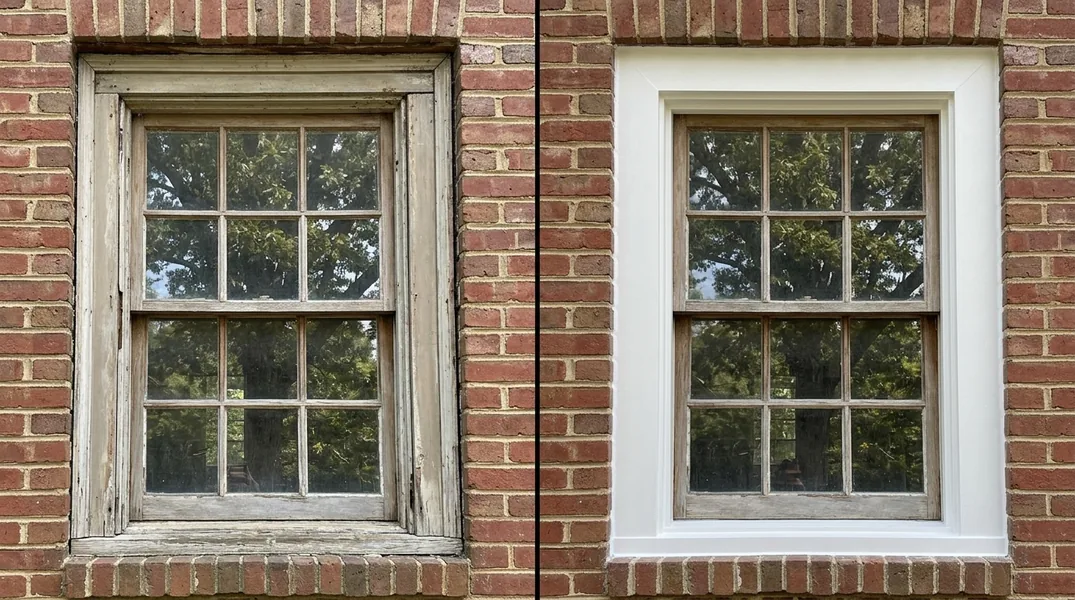
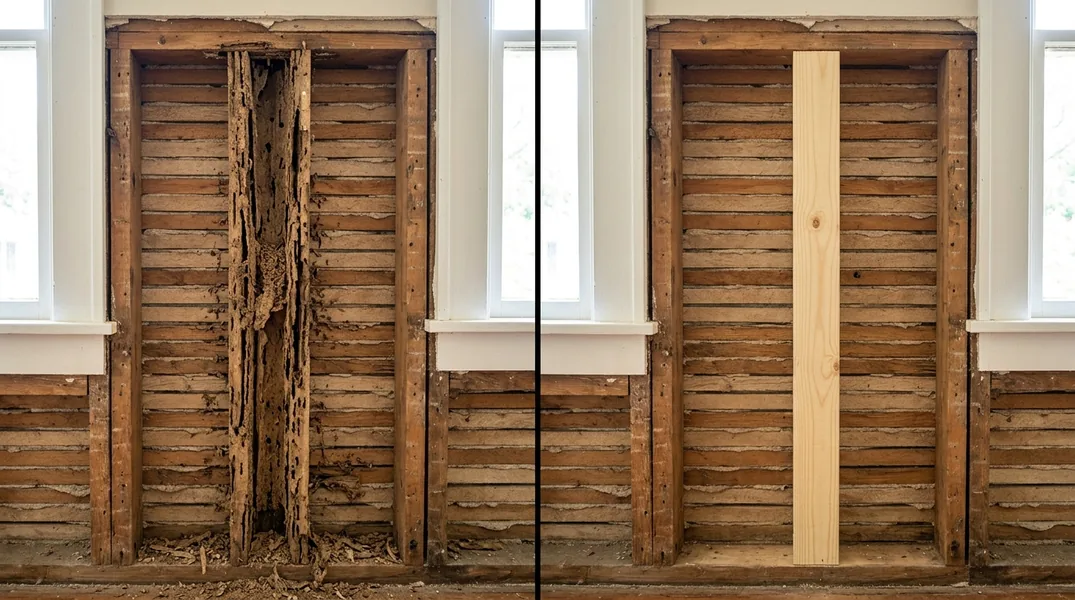
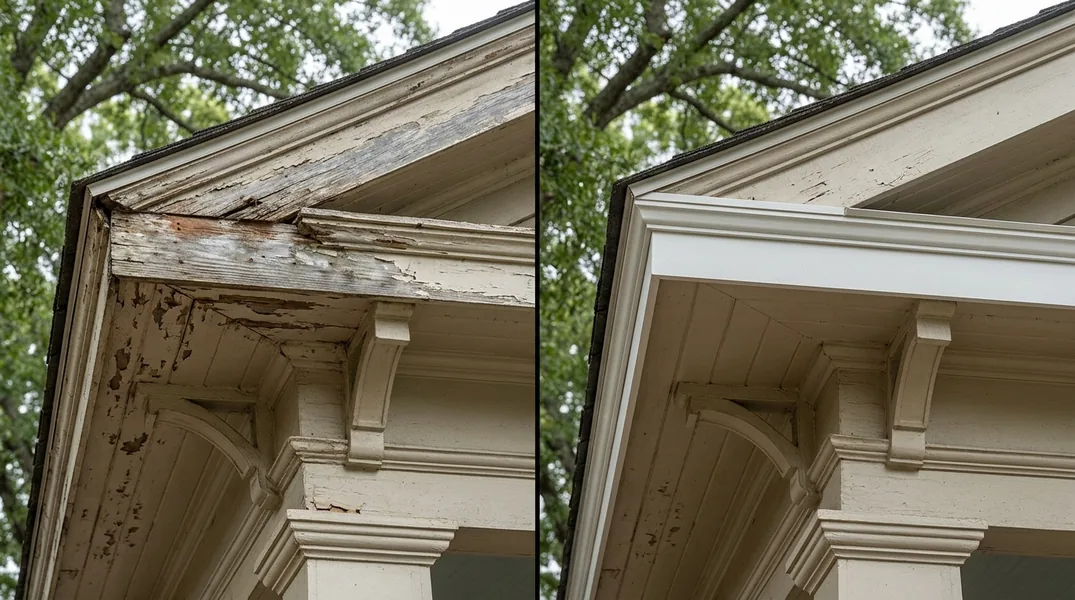
Wood fails in Charlotte for reasons rooted in climate and geography. Dry rot is not standing water but sustained moisture, the kind that the Piedmont's humidity and poor drainage around foundations supply year after year to siding, sills, fascia, and deck frames. Wet rot settles in where water sits longest: at window sills, door thresholds, and where a deck ledger bolts to the house without a moisture barrier. Termites and wood-boring beetles hollow a member from the inside while the paint film overhead still looks sound, a pathology that a pest inspection reveals but that only carpentry can address. What all three have in common is that they advance slowly, and that the repair depends entirely on reading the wood correctly.
We assess rot by probing to find where sound wood begins, checking what lies behind the visible surface, and tracing the water path that fed it. A member with cosmetic surface decay but a sound core can be cut out and rebuilt in place. A joist or sill that has lost too much section gets replaced. The honest call is this: if the water source is not closed, the repair fails again. Filler over rot is not a repair. On insect damage, we work from your own pest inspection report, repair and replace the damaged wood, and nothing more. Pest treatment, fumigation, and chemical work are a separate regulated trade, and we do not perform them. If you have found advancing decay or received a pest report, call (980) 324-3978 to schedule an inspection, or request a Wood Rot & Dry Rot Repair estimate to understand what you're looking at.
The decision to repair or replace comes down to three questions: how much sound section is left in the member, whether the water source can be closed, and what each option costs. A Termite Damage Repair job might mean replacing a hollow rim joist and sistering the rim band back to sound wood. A rotted sill plate under a load-bearing wall might require temporary support while the old sill comes out and a new one is bolted in. We quote both paths when both are honest answers, and we explain why one makes more sense than the other.
Structural Carpentry in Charlotte: Joists, Beams and Settling
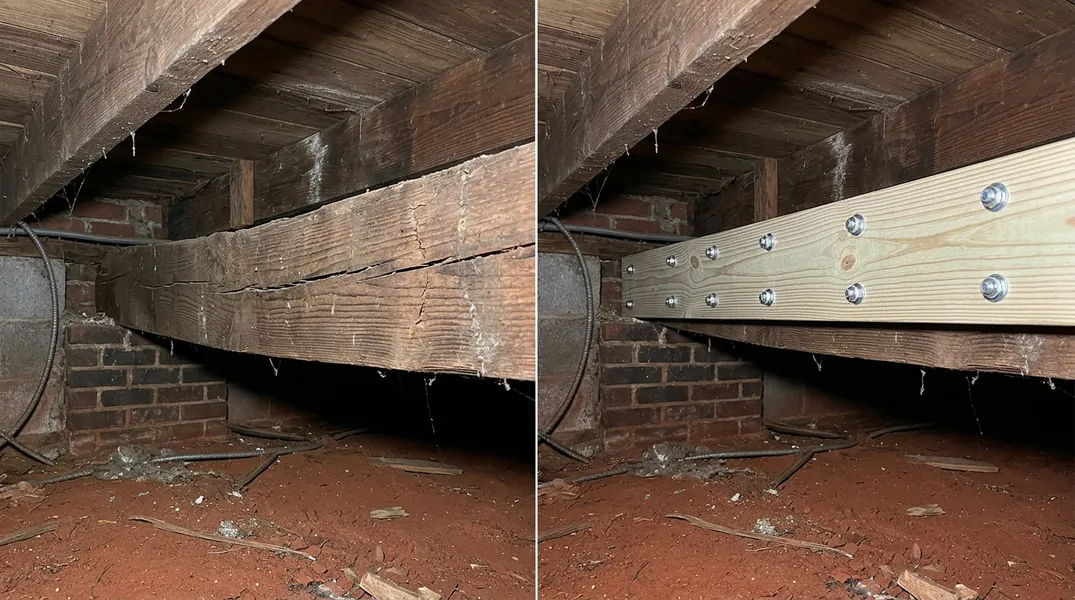
Structural carpentry in Charlotte means understanding what a century of settling looks like and what it does not. A sloping floor in a 1920s Colonial Revival or a 1950s ranch is usually the slow, stable settlement of an old building, not active failure. Sticking doors and uneven treads are the normal condition in older stock here. What matters is whether something is still moving and how the structural members are doing where they bear weight. A soft or bouncy floor, though, signals that a floor joist or subfloor section has lost strength, and that requires attention. We repair by sistering a weakened joist to a sound new one, replacing subfloor sections in place, restoring sill plates and rim joists, and working with engineered beams and headers where the opening or load demands it. Floor Joist & Subfloor Repair often restores a floor to level without removing and replacing the entire structure.
Load-bearing wall removal and beam replacement are larger undertakings, and they commonly require drawings from a licensed structural engineer and a permit from the local building department. We build to those engineered drawings rather than produce them. The same holds for sizing a new beam to carry the load above it or installing a header in a load-bearing opening. Beam Replacement & Load-Bearing Wall Removal work depends on getting the math right before the framing begins, and that is the engineer's role. We handle the carpentry that follows.
Finish Carpentry and Built-Ins in Charlotte Homes
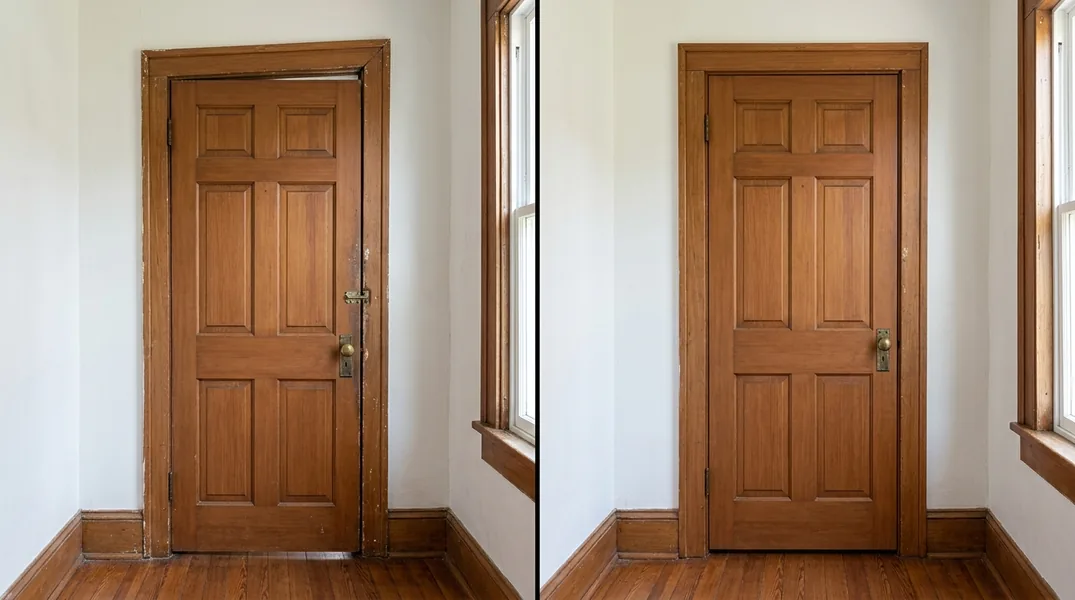
Finish carpentry in Charlotte means working with a housing stock full of detail and character. The bay windows, compact floor plans, and original millwork in Myers Park Colonials and Dilworth Craftsman bungalows set the standard for what we match and restore. Baseboards, casing, crown molding, and wainscoting all look better when coped joints replace caulked corners and when scribing to out-of-plumb walls is done by hand rather than hidden under filler. We install Crown Molding & Baseboard Installation with consistent reveals, match existing period profiles, and respect the logic of the original design. Custom built-ins, cabinet work, Interior Door Installation & Repair, and stair and railing work all follow the same principle: the craft is in the details.
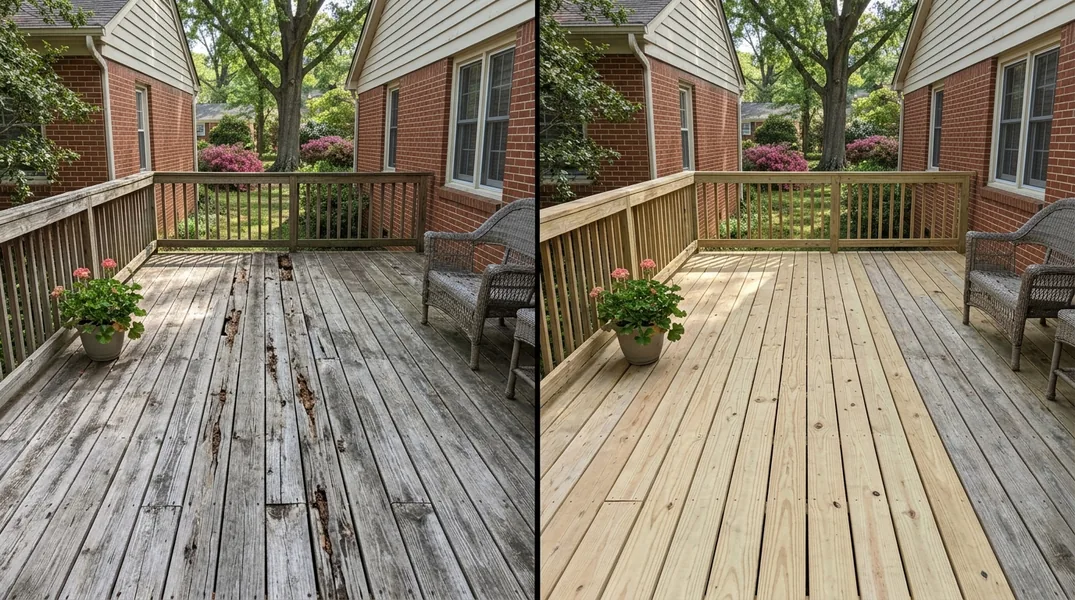
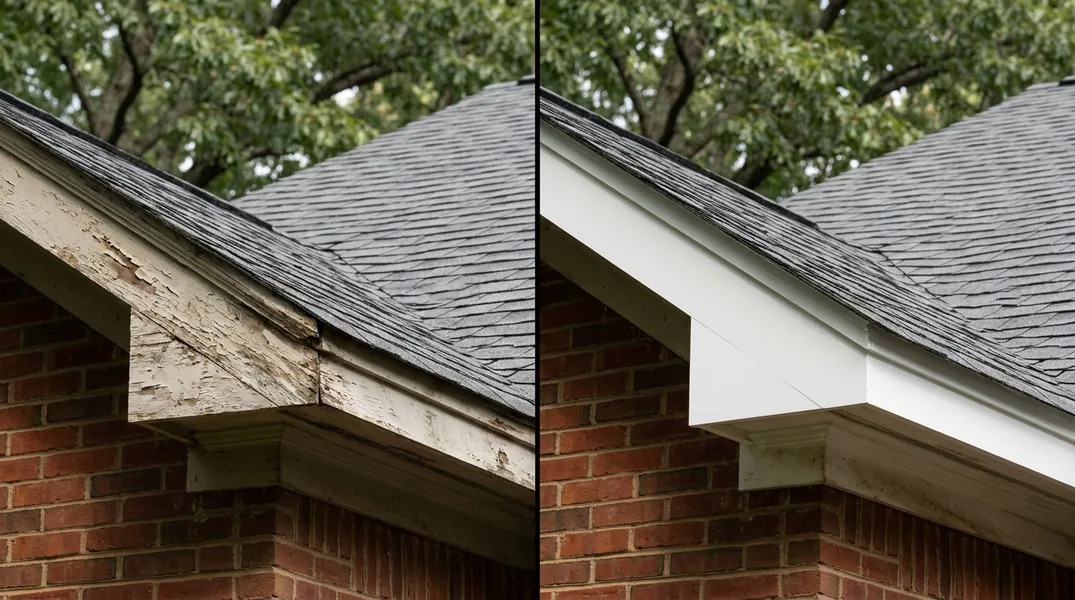
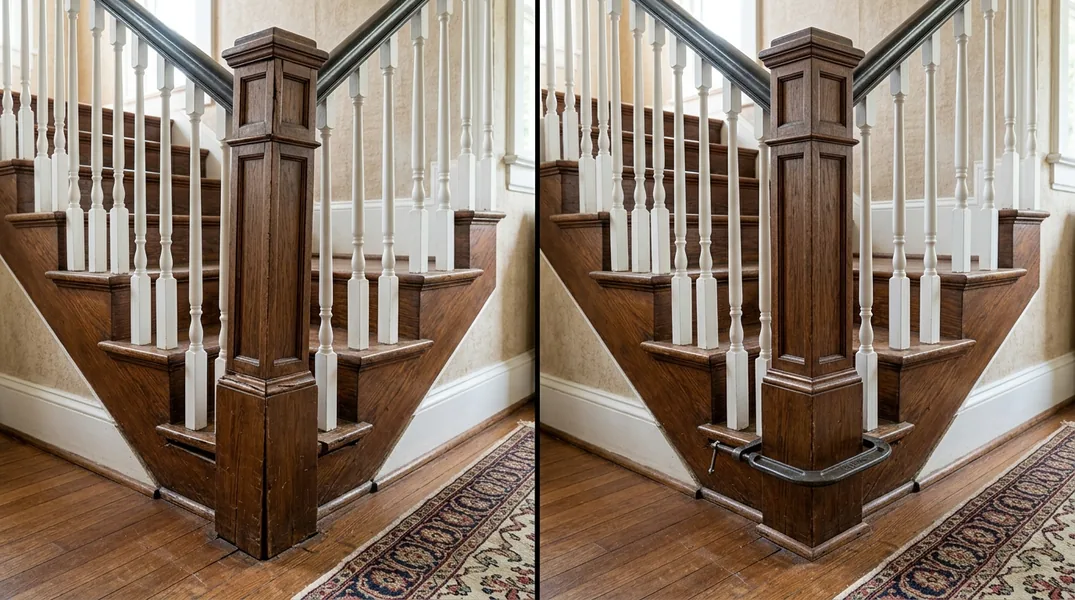
Interior and exterior doors, stairs and railings, and Custom Built-Ins & Shelving all require the same attention to fit and finish. A door jamb needs to be square and plumb, or the door will bind. Stairs need consistent rise and run, and railings need to be solid underfoot. We bring the same care to Deck & Porch Repair and Fascia, Soffit & Exterior Trim Repair, where weather and exposure demand sound joinery and proper drainage.
Permits, Repair-or-Replace & What We Do Not Do
Permits and the repair-or-replace decision are two sides of the same question: what does the work actually require, and what does the local authority require of you? A permit is commonly required for structural work such as removing or altering a load-bearing wall, replacing beams or joists, and altering stairs or exterior decks, but requirements vary by jurisdiction and by the scope of work. Some repairs to existing members fall outside permitting thresholds in some areas; others do not. The only way to know is to ask. We can help you understand what you are looking at, and you should verify requirements with the local building department before starting your project.
On the repair-or-replace question itself, the criteria are straightforward: how much sound section is left in the member, whether the water source or cause of failure can be closed, and what the two paths cost. When both are viable, we quote both. We are fully insured, and we can help you document damage for an insurance claim, but we cannot promise coverage or speak to what your policy will pay. Requirements vary across Charlotte, Concord, Gastonia, Huntersville, Matthews, and surrounding areas. Always verify with the Charlotte building department before starting your project.