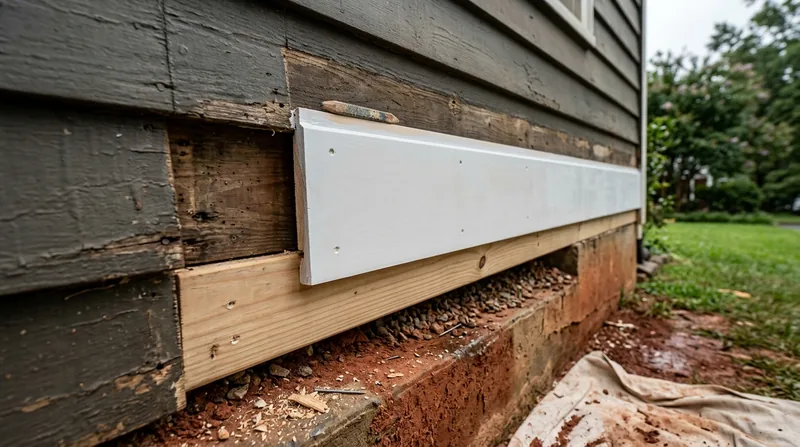




Wood Rot & Dry Rot Repair in Charlotte is a year-round need in this region. The humid Piedmont climate, combined with dense red clay that holds moisture against foundations, keeps wood decay working behind brick and clapboard facades long after a homeowner notices the first soft spot. Whether it's rotted siding trim on a century-old Myers Park Colonial, decayed rim joists under a Dilworth cottage, or compromised framing in a NoDa mill conversion, we cut out the decay, treat what's sound, and rebuild with rot-resistant lumber. Charlotte's towering willow oaks and mature tulip poplars shed limbs year-round, and storm damage often exposes wood that's been quietly softening for years. We help you understand what the damage means, what it costs to repair, and when replacement is the honest answer.
Why Wood Rot and Dry Rot Matter in Charlotte's Humid Climate
Charlotte's subtropical summers and moderate winters create ideal conditions for wood decay. The combination of high humidity, poor drainage in Piedmont clay soil, and the region's frequent thunderstorms means moisture finds its way into siding, trim, and framing year-round. Unlike drier climates where wood rot advances slowly, Charlotte's wetness accelerates decay. A soft spot in fascia or a spongy sill plate doesn't stay small. Over months, decay spreads into structural members, weakening the frame and creating conditions for secondary problems like insect damage or mold growth behind the wood.
- Moisture trapped in Piedmont red clay against foundation sills creates the perfect entry point for wood decay.
- Fallen limbs from mature oaks and poplars expose wood to weather and rain, accelerating rot in trim and framing.
- Decayed wood loses structural capacity and can no longer carry loads or resist wind, especially during hurricane-season storms.
- Early repair prevents larger framing replacement and keeps repair costs proportional to the actual damage.
Addressing wood rot early keeps the repair focused and affordable. Waiting allows decay to spread into structural members, which then require replacement rather than repair.
Key info: Charlotte's humid climate means wood rot is active year-round, not just after visible storm damage. Siding trim, fascia, sill plates, and rim joists in homes across Elizabeth, Plaza Midwood, Cotswold, and Sedgefield are all at risk. Early detection and repair prevent the decay from reaching load-bearing framing.
For more information on related structural damage, see our guide to Floor Joist & Subfloor Repair.
How We Repair Wood Rot: Our Process in Charlotte Homes
We start by identifying the extent of decay. Using hand tools and careful inspection, we distinguish between surface rot and decay that has penetrated into structural wood. Sound wood gets cleaned and treated with a rot-inhibiting finish. Decayed sections are cut out cleanly and replaced with pressure-treated or naturally rot-resistant lumber that matches the original profile and grain direction. We then address the moisture source, whether that's improving drainage around the foundation, redirecting water away from siding, or ensuring proper ventilation in rim joists and crawl spaces.
- We probe and map the decay boundary to determine exactly how much wood needs to come out.
- Sound wood is cleaned, dried, and sealed with a protective finish to stop future moisture penetration.
- Decayed sections are removed and replaced with rot-resistant lumber, sized and shaped to match the original.
- We identify and correct the moisture source, whether poor drainage, missing flashing, or blocked ventilation.
- All repairs are finished to match the surrounding wood, whether painted trim or stained casing.
This approach preserves the original character of the home while stopping decay at its source. We don't replace wood unnecessarily, and we explain what we find so you understand the repair.
Example: A homeowner in Myers Park noticed soft spots in the corner trim where a downspout was missing. We removed the decayed trim boards, cleaned and sealed the sound wood underneath, and installed new trim with proper drainage. The repair cost less than $1,200 because we caught it before the decay reached the structural framing underneath.
For larger structural concerns, see our work in Framing & Structural Carpentry.
Wood Rot Repair Methods and When We Use Each
| Repair Approach | What It Involves | Best For |
|---|---|---|
| Cut and Replace | Remove decayed section cleanly, replace with pressure-treated or rot-resistant lumber, finish to match. | Siding trim, fascia, sill plates, rim joists with localized decay. |
| Epoxy Consolidation | Inject epoxy into partially decayed wood to harden the remaining structure, then seal and finish. | Historic trim or casing where matching the original profile is important and decay is shallow. |
| Sistering | Bolt or nail a sound piece of lumber alongside a weakened beam or joist to restore load capacity. | Floor joists or beams with moderate decay where full replacement is not necessary. |
| Full Member Replacement | Remove the entire rotted beam, joist, or structural member and install new lumber with proper sizing. | Structural members (beams, floor joists, rim joists) with extensive decay or load-bearing responsibility. |
| Moisture Control | Improve drainage, redirect water, add or repair flashing, ensure ventilation to stop future decay. | All repairs, to prevent recurrence and protect the repair investment. |
The best method depends on the location of the decay, its depth, the wood species, and whether the member carries a structural load. We assess each situation and recommend the approach that gives you the longest-lasting result at the most reasonable cost.
Wood Rot & Dry Rot Repair Cost in Charlotte: What to Expect
Wood rot repair in Charlotte typically starts at $650 for small, localized repairs such as a single rotted trim board or a small section of fascia. Larger jobs involving multiple areas, structural framing, or extensive moisture correction move into the $1,500 to $4,000 range. The final cost depends on several factors: how much wood needs to come out, whether the decay has reached structural members, the lumber type needed for replacement, and whether moisture sources require correction such as drainage work or flashing installation.
A homeowner in Huntersville with rotted rim joists under a 1970s ranch home paid approximately $2,800 to remove decay from a 12-foot section, sister in reinforcement, and seal the crawl space. A Mint Hill homeowner addressing soft fascia and soffits across the back of the house spent $1,400. Neither job required structural engineering or permit work because the repairs did not alter the load path of the home.
We recommend getting two or three estimates so you can compare approach and price. Some contractors will push full replacement where repair is sufficient. We repair when the wood justifies it, and we tell you clearly when replacement is the honest answer. Visit our pricing page for a detailed breakdown, and call us at (980) 324-3978 for a free estimate specific to your home.
Cost factors: Deck or porch repairs often cost more because they involve structural access and load-bearing concerns. Interior trim repair is typically less expensive than exterior work because weather exposure and moisture control are simpler. Structural members (beams, joists, rim joists) cost more than trim because their failure affects the entire load path and may require temporary support during replacement.
Wood Rot & Dry Rot Repair Near Me: What Charlotte Homeowners Should Know When Hiring a Contractor
When you're looking for a carpenter to handle wood rot repair in Charlotte or the surrounding areas, a few things separate a solid contractor from one who will oversell you unnecessary work. Ask whether the contractor has actually inspected the decay and understands the moisture source, not just the visible soft spot. Fully insured contractors carry general liability and workers' compensation, which protects you if someone is injured on your property. Get references from recent jobs, especially repairs on homes similar to yours (age, siding type, location in Charlotte). Ask about permits. Structural repairs and alterations to load-bearing walls commonly require a building permit and may need a licensed structural engineer. The Charlotte building department can tell you what applies to your specific work.
- Verify that the contractor is fully insured and can provide a certificate of insurance before work begins.
- Ask to see examples of past repairs, especially on homes built in the same era as yours.
- Get a written estimate that describes the decay, the repair method, the lumber type, and the moisture correction.
- Confirm whether a permit is required by contacting the Charlotte building department or asking the contractor to verify.
- Check that the contractor explains the repair, not just the cost, so you understand what's being fixed and why.
A good estimate takes time. If a contractor gives you a price over the phone without seeing the damage, that's a red flag. We schedule a free inspection, explain what we find, and give you a detailed estimate so you can make an informed decision. Call us at (980) 324-3978 or visit our contact page to request an estimate.
Wood Rot & Dry Rot Repair in Charlotte: Pricing Guide
| Service | Price | Details |
|---|---|---|
| Small localized repair (trim, fascia, single board) | Starting at $650 | Cut out decayed section, replace with rot-resistant lumber, finish to match. Includes moisture assessment. |
| Medium repair (multiple trim areas, small section of rim joist or siding) | Starting at $1,500 | Multiple areas or structural framing involvement. Includes drainage correction and protective sealing. |
| Large or structural repair (extensive beam, joist, or sill plate damage) | Starting at $3,500 | Full member replacement or sistering. May include temporary support, permitting, and moisture control work. |
| Complex job (multiple structural members, extensive moisture work, or historic preservation) | On estimate | On-site assessment required to determine scope, lumber type, access challenges, and whether engineering is needed. |
| Travel | Included | No mileage charge for Charlotte and surrounding service areas including Concord, Gastonia, Huntersville, Matthews. |
| Free estimate | No charge | Response within 24 hours. Includes inspection, damage assessment, repair options, and written estimate. |
Indicative pricing, the exact cost depends on square footage, finish, and site access. Free personalized estimate within 24h at (980) 324-3978.


