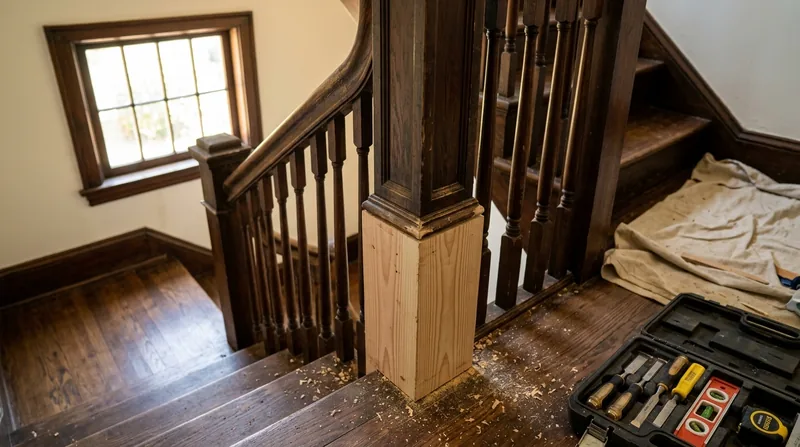




Stairs and railings take a beating in Charlotte homes. Between the humid Piedmont climate, decades of foot traffic, and the occasional ice storm that stresses wood from the inside out, treads crack, balusters loosen, and stringers sag. Whether your Myers Park Colonial has original hand-turned balusters that need restoration, your Dilworth bungalow's staircase squeaks with every step, or your ranch home needs a code-compliant handrail for safety, stair and railing repair in Charlotte is one of those jobs that feels minor until someone puts their foot through a tread. We repair and rebuild staircases the right way, restoring character where it matters and replacing only what the wood cannot hold.
Why Stair and Railing Repair Matters in Charlotte's Older Homes
Charlotte's residential stock spans from century-old Colonial Revivals in Myers Park to mid-century ranch homes scattered across Cotswold and Sedgefield. Many of these houses were built when building codes were looser and wood quality was higher, but time and moisture work against both. Loose balusters and squeaky treads are often the first sign that the stair structure is moving, and movement means the fasteners are working loose or the wood itself is shifting. In Charlotte's humid climate, seasonal swelling and shrinking cycles can loosen mortise-and-tenon joints that have held for seventy years. Addressing these issues early keeps people safe and prevents expensive structural work down the road.
- We tighten loose balusters by re-securing fasteners and reinforcing mortise joints where the baluster meets the rail.
- We silence squeaky treads by identifying the source (subfloor movement, fastener failure, or tread separation) and securing it from above or below.
- We repair or replace damaged stringers (the angled support boards that hold the treads) without unnecessary full staircase replacement.
- We install or upgrade handrails and guardrails to meet current building code, critical for safety and required in many situations.
- We restore original railings in historic homes, matching profiles and finishes so the repair is invisible to the eye.
A properly functioning staircase is a safety feature, not a luxury, and Charlotte's building department enforces code requirements on guardrail height, baluster spacing, and handrail diameter for good reason.
Key info: Stair modifications or guardrail installations often require a permit from the Charlotte Building Permit and Inspections office. We help coordinate that process and work from the approved plans. Check with your local building department to confirm requirements for your specific project.
How We Repair and Restore Your Staircase in Charlotte
Every staircase failure starts with a diagnosis. We inspect the treads, risers, stringers, balusters, and newel post to find out whether the problem is a loose fastener, a cracked or rotted board, or structural movement in the framing beneath. Once we know what we're dealing with, we decide whether to repair or replace each component. Many staircases that look shot can be brought back to life with targeted repairs that cost far less than a full rebuild.
- We examine the staircase under load, checking for movement, soft wood, and loose connections.
- We identify whether damage is cosmetic (surface cracks, finish wear) or structural (rot, fastener failure, movement).
- We propose repair or replacement for each component, explaining the cost and longevity of each option.
- We execute the work, often keeping the staircase in use during the repair if the damage is isolated.
- We finish or refinish the stairs to match the original or your preferred aesthetic.
In a typical Elizabeth neighborhood home, a squeaky staircase often comes down to fasteners that have worked loose over thirty years. We re-secure them from underneath, and the squeak is gone. In a historic Myers Park house with original hand-turned balusters, we might re-glue and re-wedge the mortise joints, then touch up the finish. Full stringer replacement is necessary only when the wood is rotted or cracked beyond repair.
Example: A Dilworth cottage with a 1920s open staircase had four balusters that moved when touched and a tread that creaked. We re-secured the balusters by re-wedging the mortise joints, reinforced the tread fasteners from below, and restored the original stain. Total cost was under $1,200. A new staircase would have cost five times that and removed the character of the home.
Stair Repair Methods and When to Use Each
Not every staircase repair is the same. The method depends on the type of damage, the age and style of the staircase, and whether the stairs are being used during the repair. Below is how we approach the most common scenarios.
| Repair Type | Description | Best for |
|---|---|---|
| Tightening and Re-securing Fasteners | We remove loose nails or screws, drill new pilot holes, and install larger or structural fasteners, often from underneath so fasteners are hidden. | Squeaky treads, loose balusters, and minor movement in otherwise sound wood. |
| Mortise and Tenon Re-gluing | Original balusters and railings are often joined with mortise-and-tenon joints. We disassemble, clean, re-glue, and re-wedge these joints to restore the connection without visible fasteners. | Historic staircases and original railings in Myers Park, Dilworth, and other older Charlotte neighborhoods. |
| Tread Replacement | We remove a damaged tread and install a new one, matching the original thickness, width, and finish. Stringers and risers remain in place if sound. | Cracked, rotted, or severely worn treads in otherwise structural stairs. |
| Stringer Repair or Replacement | Stringers are the angled support boards that carry the load. If rotted or cracked, we either sister a new board alongside the damaged one or replace the stringer entirely. | Structural damage to stringers, particularly in basements or areas exposed to moisture. |
| Handrail and Guardrail Installation | We install code-compliant handrails and guardrails, securing them to the staircase structure with proper fasteners and spacing to meet current building code. | Safety upgrades, code compliance, and new construction or major remodels. |
Stair and Railing Repair Cost in Charlotte: What to Expect
Stair repair costs vary widely depending on what is broken and how much of the staircase needs attention. A simple tightening of loose balusters might run $600 to $800. A full tread replacement could be $1,200 to $2,000. A damaged stringer replacement or a full staircase rebuild is more, and structural issues that require engineering or permit work will add cost and timeline. The key is getting a clear diagnosis first, then a realistic price for the repair you actually need.
Several factors shape the final bill. The extent of damage matters most, followed by whether the stairs are in active use during the repair (which may require temporary support or staging), whether the original materials are still available or need to be sourced, and whether finishing or staining is needed to match the existing stairs. A historic home with original balusters and rails will cost more to restore than a straightforward modern staircase, but the result is worth it if the original detail matters to your home's character.
We recommend getting 2 or 3 estimates before committing. Every carpenter will diagnose the problem slightly differently, and the price should reflect the scope of work, not just a flat rate. Call us at (980) 324-3978 for a free, no-obligation estimate, or visit our full pricing overview to see how other carpentry work is structured in our market.
Stair and Railing Repair Near Me: What Charlotte Homeowners Should Know When Hiring a Carpenter
Finding the right carpenter for staircase work matters. Stairs are high-use, safety-critical features, and the work requires both structural knowledge and finish carpentry skill. A good repair carpenter understands how stairs move and settle, knows how to read original joinery, and can explain why a repair is the right call instead of a replacement.
When you call a contractor, ask whether they do their own work or subcontract it. Ask for references from previous stair repairs, not just general carpentry. Check whether they are fully insured and whether they have experience with the age and style of your staircase. Older Charlotte homes often have distinctive details, and a carpenter who has worked on similar homes will move faster and make better decisions. Ask about permits, too. If your repair includes a new guardrail or a significant structural change, a permit is likely required, and a good contractor will know that and factor it into the timeline and cost.
If your home is in a historic district or a protected neighborhood, check your local HOA or historic preservation rules before starting work. Some areas have restrictions on what materials or finishes can be used. We can help you navigate those requirements and work within them. Call us at (980) 324-3978 or request a free estimate online.
Stair & Railing Repair in Charlotte: Pricing Guide
| Service | Price | Details |
|---|---|---|
| Baluster Tightening and Re-securing | Starting at $600 | Loose balusters re-fastened and reinforced, typically 2 to 4 hours labor on a standard staircase |
| Single Tread Replacement | Starting at $1,200 | One damaged or rotted tread removed and replaced with new wood, finish matched to existing stairs |
| Stringer Repair or Replacement | Starting at $1,800 | Damaged stringer sistered or replaced depending on extent of rot or structural failure, includes reinforcement |
| Handrail or Guardrail Installation | Starting at $900 | Code-compliant rail or handrail installed, fastened to stair structure, height and baluster spacing verified |
| Historic Staircase Restoration | On estimate | Original balusters, rails, and details restored, mortise joints re-glued and re-wedged, finish work included |
| Free Estimate | No charge | Response within 24 hours, on-site inspection and diagnosis included, no obligation to book |
Indicative pricing, the exact cost depends on square footage, finish, and site access. Free personalized estimate within 24h at (980) 324-3978.


